Week 24 – in which we interview a British audiobook narrator and find out what’s really in the cupboard under the stairs…
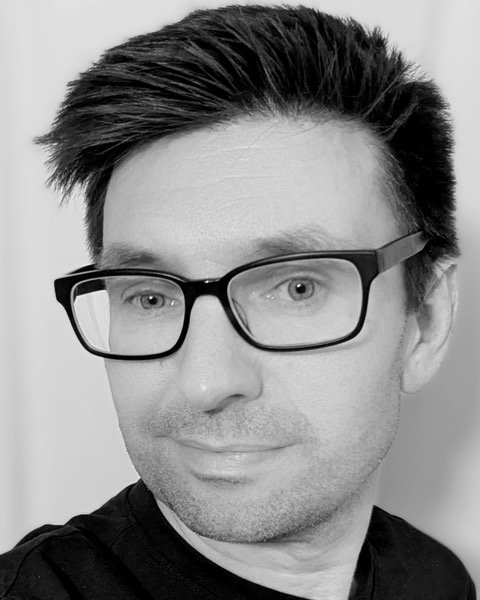
In the spotlight this “week” is British audiobook narrator Peter J. Matthews. Peter has worked for a wide range of publishing clients, both indie and traditional, and is passionate about the distinct quality that human narration can bring to the listening experience.
Peter is another of WoodPig Press’s “loose collective of freelancers”. If you’d like to commission him through us, then please get in touch.
As usual, the format of the interview was an email correspondence. Questions and responses from me (Gareth Southwell) are in bold.
So, what’s your background? How did you get into narration?
I found my way to audiobook narration through my acting background, having been to drama school in my early 20s. That professional training, brilliant as it was, didn’t exactly lead to a glittering career though. I spent the next 20+ years doing all sorts of bits of local theatre, short films and occasional acting jobs, all whilst raising a family and paying the bills working as a village postman.
My journey to being a full-time narrator started about 5 years ago when I decided to give voiceover work a go. I built a tiny home studio under my stairs and began looking for any voice work that I could find. And one of the first things I was offered was a short children’s book. I’d spent many an evening reading to my own kids, I had the acting skills and I’d always loved audiobooks, so it seemed like something I should keep pursuing – so I did.
The acting life is quite brutal, from what I’ve heard! I’m amazed anyone makes it. There’s the stereotype of every waiter in LA being an out of work actor, but the truth is that most creatives supplement their income with non-creative work – it’s the lucky few that can do it 100% of the time. But audio narration seems like a really nice compromise. Would you say that it involves different skills to acting? Have you developed any new ones?
That’s a really interesting question. To me, narration still requires all of my acting skills, but there’a subtlety to it. An audiobook shouldn’t sound like a recording of a stage play or even like a radio drama. In my mind, I’m telling the story to just one person. Of course I want all the characters to be as real and distinctive as possible, and for their emotions to be genuine. However, it’s still just me reading a book to a listener, so finding the right level of performance is vital. For example, when the text says someone “shouts angrily”, I have to give the sense of that without actually bursting anyone’s eardrums! It’s the same with character voices. Everyone needs to sound different, and I work very hard to get accents and voices right, but no one should sound too over the top or caricatured. There are always exceptions of course. Especially when it comes to things like children’s stories and fantasy adventures!
And yes, I’ve definitely had to learn some new skills too, particularly on the technical side. I’m no sound engineer, but I’ve had to learn how to set up and correctly use all my equipment, set recording levels and how to use software to fix various issues that can occur. In many ways it’s like being an actor, director and sound engineer all at the same time! I’ve also taught myself the basics of post-production (editing, mastering, etc) and have self produced around half of all my audiobooks.
That’s a really interesting point about narration being different from “acting”, and I know exactly what you mean. I’ve auditioned narrators that will act out the narrative almost – as you say – like it’s a radio play. I guess narration is a distinct skill, with conventions all of its own.
It’s interesting too that you’ve had to acquire all these technical skills. I’ve found that with my own publishing work, and I’m sure many creatives now feel the same, that you end up being a sort of one-man band. That’s the good and bad side of technological development, isn’t it? It enables these little cottage industries (great), but the workload and learning curve are immense.
In terms of your narrative style – and your acting in general – do you have people that you admire, or that you’ve learnt from?
I’m fortunate to have worked with and learnt from some brilliant narrators. I spent a day at a studio workshop with an audiobook legend called Gordon Griffin, who’s narrated over 1000 books! I’ve also worked with a wonderful narrator and coach called Ana Clements, who’s helped me enormously. Last year, Ana, along with two other British narrators, Helen Lloyd and Esther Wane, organised the first ever UK Audiobook Narration conference over two days in Leicester. I went from only knowing a handful of other narrators, to meeting and working with 40 of the very best in the country.
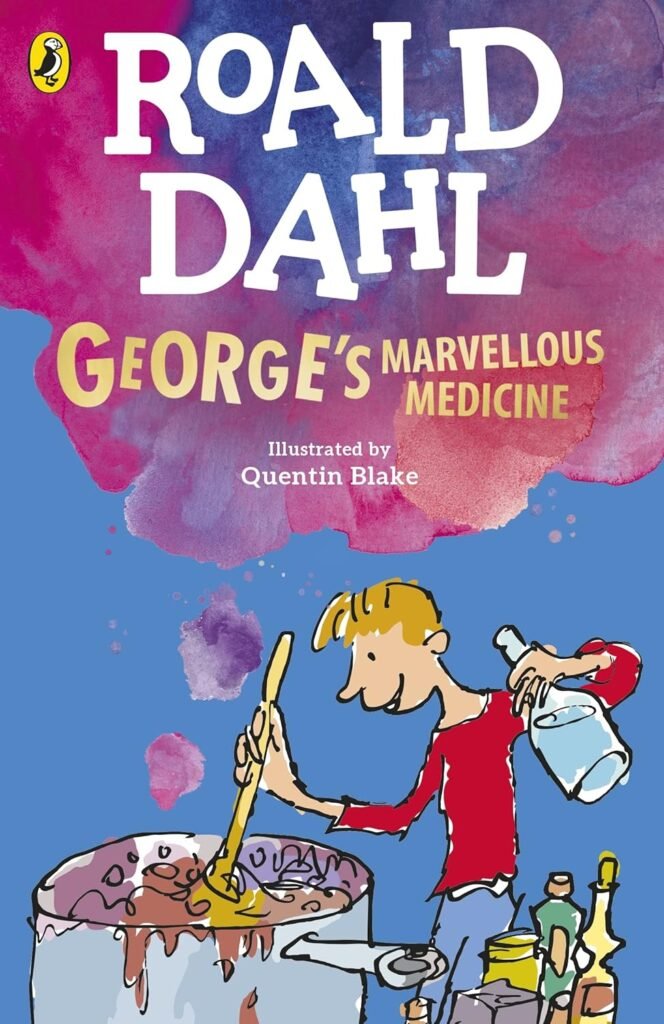
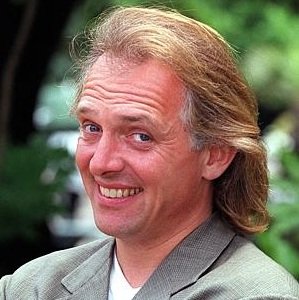
I think one of my very earliest inspirations as a storyteller was Rik Mayall, when he read George’s Marvellous Medicine in his uniquely riotous style for Jackanory, back in the days of great kids’ TV. And some of my favourite current actors also happen to be excellent narrators. I’ve recently been listening to a couple of Terry Pratchett audiobooks, read superbly by Richard Coyle and Andy Serkis, and also a Matt Haig novel read by Carey Mulligan. And I don’t know if he does audiobooks, but as an actor I hugely admire Toby Jones. I’ve never seen him be anything less that extraordinary!
There’s nothing like learning from your peers!
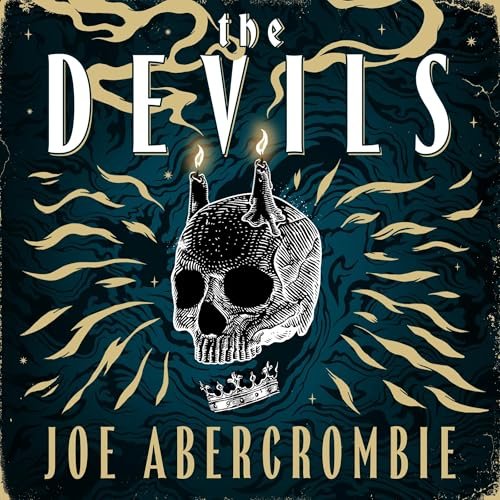
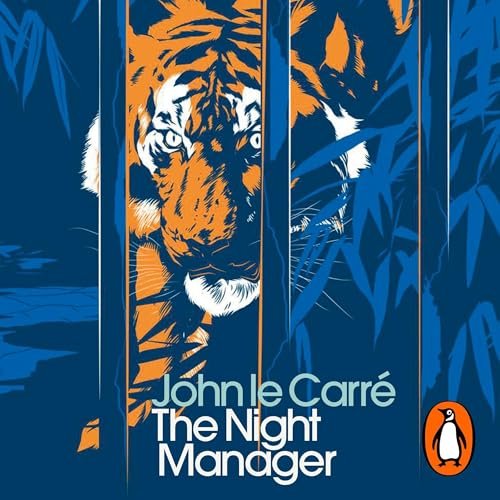
I loved Rik Mayall (bless him), and I well remember his reading of the Dahl book. What a talent he was. I’ll have to check out those Terry Pratchett audiobooks. And yes, Toby Jones is magnificent. A narrator can really make a book. I’ve had books I love ruined by the wrong choice of narrator (as impressive and professional as they might be), but I guess that’s subjective. I’ve also had books brought alive by wonderful narration. I think Steven Pacey’s reading of Joe Abercrombie’s The Devils is one of the finest performances I’ve heard. I’m also a fan of Michael Jayston’s reading of John le Carré, and I would probably listen to anything Tom Hollander reads!
When you’re approached by someone for a project, what are the first steps? Are there certain types of book you won’t take on?
I’ll have to look up those audiobooks you’ve mentioned. And yes, Tom Hollander! Another actor who’s always consistently brilliant.
My starting point is that I’m always really happy to have an informal chat with anyone who’s considering creating an audiobook. From talking to lots of indy authors and smaller publishers, I know that nearly all of them would like an audio version, but they’re often unsure how they should proceed and also worried about the cost. What they’ll find with me, and indeed almost all the narrators I know, is that we love talking to authors! (I mean, we wouldn’t have a job without them.) Whether via email, zoom or in person, we can discuss artistic choices, such as characters and pacing, as well as how the whole process works and the costs involved. It’s often less expensive than people think, plus there may be royalty share options we can explore as well, and I’ll aways offer to record a short free “no commitment” sample before we go any further.
There aren’t any genres that I completely avoid, although I’m not keen on really graphic horror. (I do love a good ghost story though!) I narrate under a pseudonym for spicier romance, and if I genuinely don’t think I’m right for a book, I’ll say so. Also, whenever possible, I’ll try to suggest another narrator who might be right. Just so long as you choose an actual HUMAN to narrate your audiobook!
That’s a very flexible and accommodating approach. As you say, many clients won’t be familiar with what’s involved in the narration process and will be worried about costs, and a friendly chat is a great way of reassuring them. I think, as AI threatens more and more of our livelihoods, the human touch will become increasingly important in helping creatives offer something unique.
Speaking of which, how are you finding the effect of AI? I see a greater number of publishing platforms now offering free AI voice narration. How do you feel about all of that?
As you might imagine, I have some pretty strong feelings about AI voices and generative AI as a whole. We could easily have another conversation entirely about the ethical, moral and environmental issues, but for now I’ll try to keep my thoughts to AI narration.
I do understand why some authors may be tempted to experiment with AI narration. It’s a very cheap, easy and fast way to get your book into audio. It ticks that box next to ebook and hard copy, but will anyone genuinely enjoy listening to it? The way I see it, the equation boils down to this: Does an author simply want to get the audiobook out there, regardless of quality and with no real say in how it’s narrated? Or do they want the book that they’ve poured their heart and soul into brought to life in a way that will engage with a new audience and expand their readership? (Bearing in mind that audiobooks are the fastest growing area of publishing and the vast majority of listeners have extremely negative reactions to AI narrators.) I’d urge authors tempted by AI voices to check out the reviews of “virtual voiced” titles. They’ll be hard pressed to find any positive ones, particularly for fiction.
Perhaps if there’s a silver lining to all this, it’s that it might make us more appreciative of human performance and creativity in general, particularly when something really moves us. After all, you can’t hope to shake the AI’s hand one day and say, “Thank you, that was wonderful!” It certainly makes me all the more determined to keep developing and refining my craft, to make sure I’ll always be much, much better than the robot alternative!
I agree that you’re never going to get the flexibility of performance from an AI narrator that you will from a human one, but I hadn’t actually thought about the public backlash aspect of it. I guess there will be some “whale” genre listeners, who plough through umpteen titles a month, and don’t much care how nuanced the performance is, but most listeners want an elevated experience from the audiobook, not just a serviceable one (if AI can even achieve that).
Speaking of what human narrators can give us that robots can’t, where do you stand on accents? As you say, narrating isn’t simply acting, but would you voice a French character in their native tone? And how much would you differentiate male and female speakers in terms of pitch and timbre? (Ooh! Look at me pretending that I know what I’m talking about!)
When it comes to accents and other decisions on character voices, I’m always led by what the author has written. So if someone is described as French, then yes, I do give them a French accent. It’s pretty important however that the listener can still understand every word, and also that I don’t let it fall into parody (Unless of course, it’s explicitly written as a parody!). So with some accents it can be more a case of hinting at the accent, rather than laying on too thick. My way of narrating is to (hopefully) make every character sound different, and having a good ear for accents does help me with that. But everything has to come from the text. I wouldn’t give someone an accent unless that’s how they are written, and I always believe that character voices should enhance the telling of the story, not distract from it.
That’s similar to how, as a male narrator, I approach playing female characters. It’s much more about characterisation than pitch. In fact, if you listen to a variety of different men and women, you’ll find some of the women actually have a lower register than some of the men. Just compare the likes of Joe Pasquale to Kathleen Turner! As with accents, I’m just trying to give the feeling of that person’s voice, not be an impressionist. I’ve been told that I do female characters quite well. I think that’s partly down to my natural voice not being too deep or gravelly, but also because I don’t actively try to pitch women higher or put on a specific “female voice”.
Ah, Kathleen Turner…
Sorry, where was I?
Yes, that all makes sense – accents should still be comprehensible, so authenticity comes second to clarity. And in terms of the male/female thing, that’s an excellent point about vocal range across the sexes.
I agree. Although my aim is always for authenticity AND clarity, whenever possible.
OK, so you’ve been approached by a client, you’re comfortable with the subject matter, the client likes your sample. What then? Walk us through the process.
OK, so once someone has hired me as their narrator, the first thing I’ll need from them is the manuscript. Either a PDF version or a Word doc is fine. From the word count I’ll estimate the total running time, then based on that and the next available slot in my schedule, I’ll agree with the client a timeframe for recording.
I always read the book first. It’s really important that I get a feel for the shape of the narrative and who all the characters are. As I read I put together a cast list of the speaking characters (who they are, how they’re described both physically and vocally, etc) and I do some imaginary casting! This is just to help me picture the person and to give me a sort of mental hook for each voice. If an author wants to send me their own notes and descriptions, then that can be extremely helpful too. I love getting their thoughts and suggestions at the outset.
The next stage is to record the first 15 mins of the book and send it to the author for them to review. This doesn’t have to be the start of the book, although it usually is. It can be any section the author wants to hear and check. This is the point where an author can give me notes on pace, tone, character voices, etc, if they want to. Once they sign off on that 15 mins, it’s then full steam ahead recording and producing the rest of the audiobook, which can take anything from a few days to a few weeks, depending on how long the book is.
That’s a lot of work! As an author and publisher, I’m really pleased to see such a level of dedication in getting to know the setting and characters. Great to see how you welcome and incorporate feedback, too.
And what about the technical side of this? Do you have a home studio? What’s involved in the process of getting the finished audio?
Yes, there’s a lot more to it than simply sitting down in front of the mic and reading the book – and when I handle the post-production work myself (which I do for indy titles), there’s more work after I’ve finished the narration.
That technical side of things has been quite challenging to learn, but with a little professional guidance and a lot of trial and error, I’m now reasonably proficient as an audio editor. That post-production work is proofing (finding and fixing misreads), editing (cleaning up the audio) and mastering (setting specific volume levels and file types). So that when everything is done I can deliver mp3 files to the client that are ready to be uploaded to any audiobook platform.
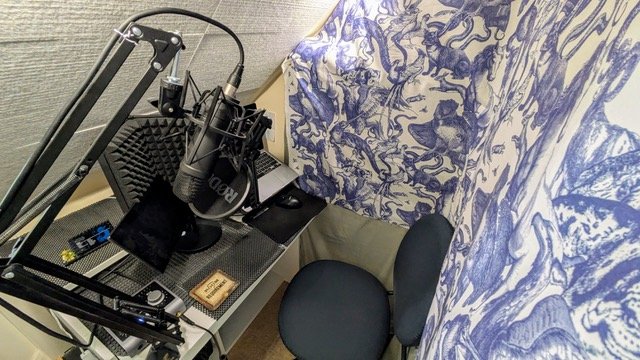
All of that – both the recording and editing work – is done from my tiny home studio. It’s quite literally a cupboard under the stairs, but with lots of acoustic insulation (which can make it more like a personal sauna in the summer!). However it sounds good, which is of course the most important thing, and it means that my daily commute is a walk down a flight of stairs. (Actually, I go for a nice long walk around a nearby lake every morning for the exercise, the peace and the birdwatching, before I seal myself away from the world in my voice booth.)
Home studios really are now an essential item for audiobook narrators. As well as indy projects, I record for a number of publishing houses from mine, and since the covid pandemic (which of course made mainstream studio work much more difficult), home recording has very much become the industry norm. As a father of two, with all that family life involves, I love the flexibility that working from home allows me.
Yes, the pandemic changed the way people work – and for the better, in most cases. I know I’d prefer to work from bed in my pyjamas than sweat in an office trussed up in a suit and tie! (You do work in your pyjamas too, right…?)
Work in my PJs? It has been known. Although this time of year (early July) my office attire tends to be a pair of shorts and not much else!
OK, I think that’s about all my questions! You’ve been a fantastic interviewee. Is there anything else you’d like to add? Any questions for me? And where can people find you if they’d like to check out your work?
Gareth, this has been an absolute pleasure. You’ve clearly got a good thing going with WoodPig Press and I’m very happy to be part of your freelancer pool (plus it sounds like a lovely place to swim!).
There’s not much else to add – only to thank you for a genuinely interesting and thought provoking conversation. Links to my website, my narrated books on Audible and socials are below. I’m always happy to connect and chat with any author who’s considering hiring a human narrator and other creative minded humans in general!
Website – peterjmatthewsvo.com
Audible – tinyurl.com/PeterJVoice
Instagram – instagram.com/peter_tells_tales/
Threads – threads.com/@peter_tells_tales
LinkedIn – linkedin.com/in/peter-j-matthews-voice-actor/
Thank you so much, Peter.
END OF INTERVIEW
Thanks again to Peter for taking the time to chat with us. It’s been a real insight.
Just a reminder that, if you’re a writer or publisher, and you want to hire top-class professionals such as Peter, contact WoodPig Press to find out more about our publishing services.