Week 23 – In which we interview an Italian illustrator and comic book artist
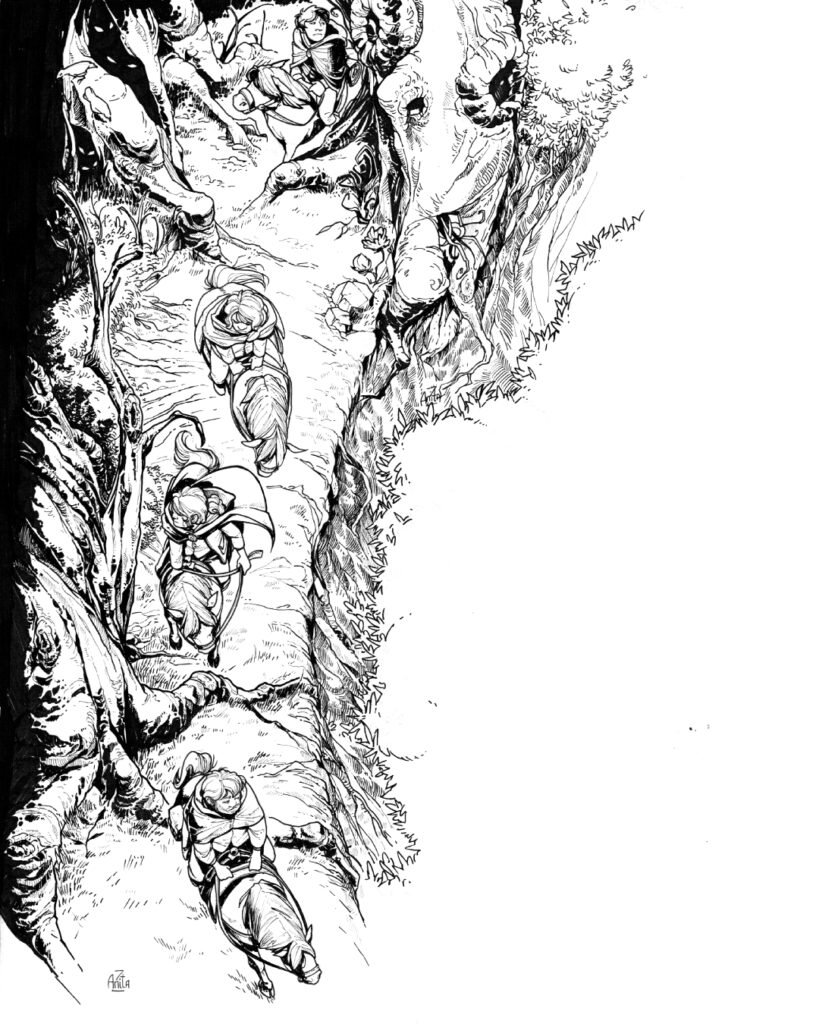
In the spotlight this “week” is Italian illustrator Anita Zaramella. As evidenced by her beautiful monochrome work and masterly grasp of line and form, Anita is heavily influenced by comics and graphic novels, and we had a lovely chat about how that style has evolved, who her heroes are, and how she creates her work.
Anita is another one of WoodPig Press’s “loose collective of freelancers”. If you’d like to commission her through us, then please get in touch.
As before, the format of the interview was an email correspondence – a bit like postal chess! Questions and responses from me (Gareth Southwell) are in bold.
How did you get into art?
I was really into comics as a kid and teen! I started out reading Tex (THE Italian household name) and Elfquest by Richard and Wendy Pini, then switched to mangas in middle school. I got my hands on a Dragon Ball art book and literally tried to copy all of the images inside. They kicked off my curiosity for how art is made, and the stories I could tell through it.
I actually started with trying to copy comics! For me, it was Asterix, Star Wars and Spiderman. Italy has a strong comics tradition, I think.
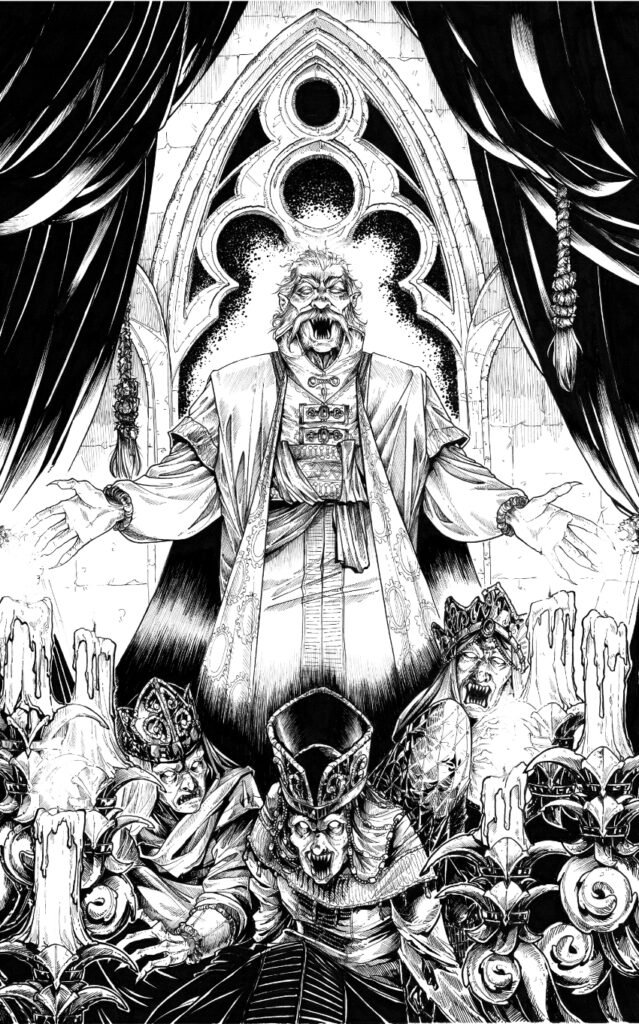
You have a wonderful grasp of light and shade. Do you think your study of comics defined your art style?
It definitely did – I was always fascinated by comics with a strong line art, which is still my main focus. I’ve also learned to use specific techniques like nib & ink, micron pens, etc, by studying manga artists. I later developed an interest in the 19th century etching style and started moving towards different subjects, but the core aspects of solid lines and black remained.
I’ll come back to tools and techniques in a bit (I’m always fascinated by that!), but can you talk a little about your influences? You mention manga artists – any ones in particular? Which artists have influenced your work? Whose work do you like now?
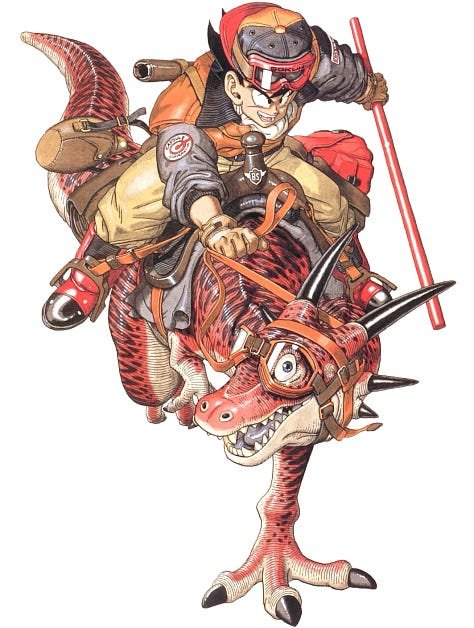
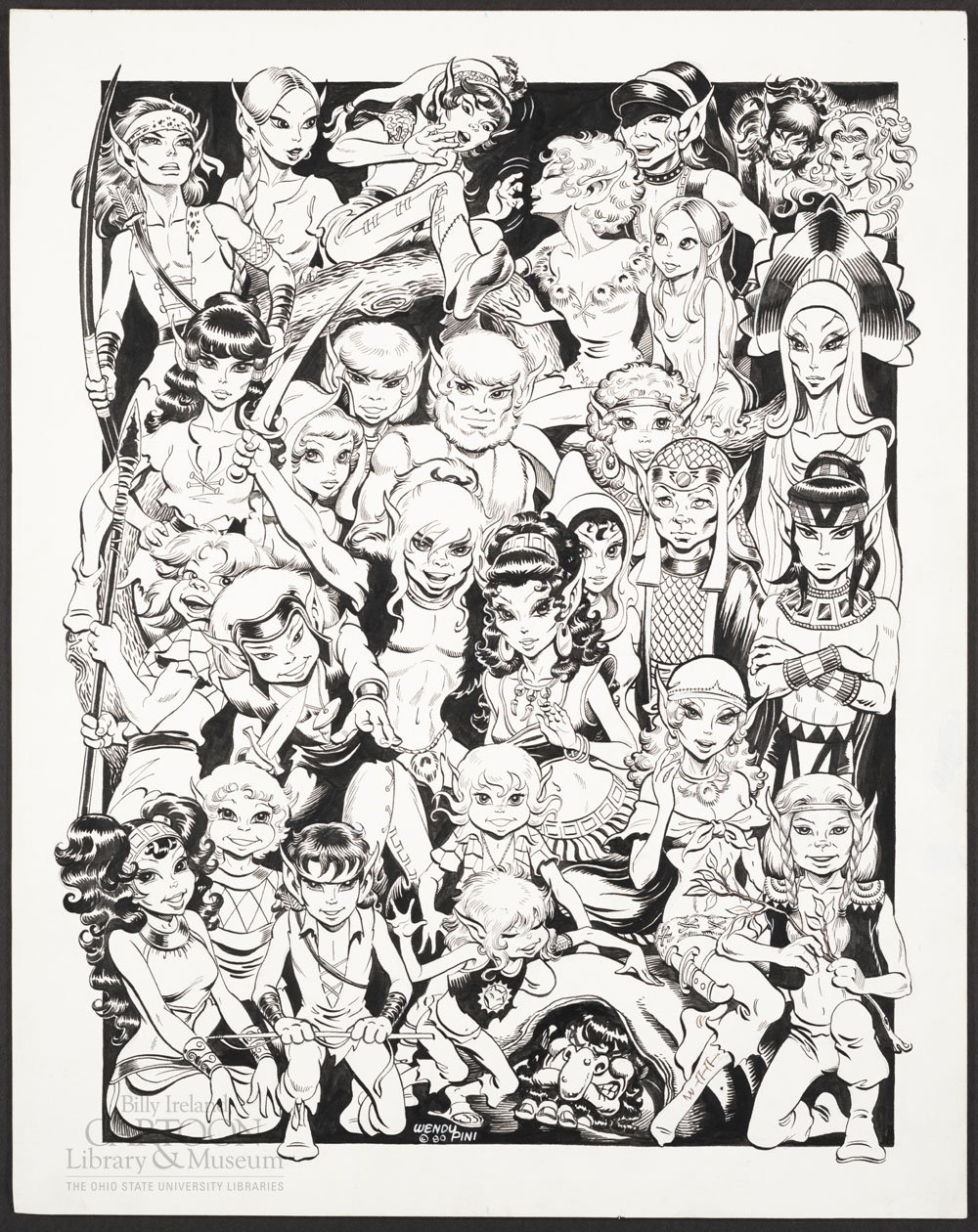
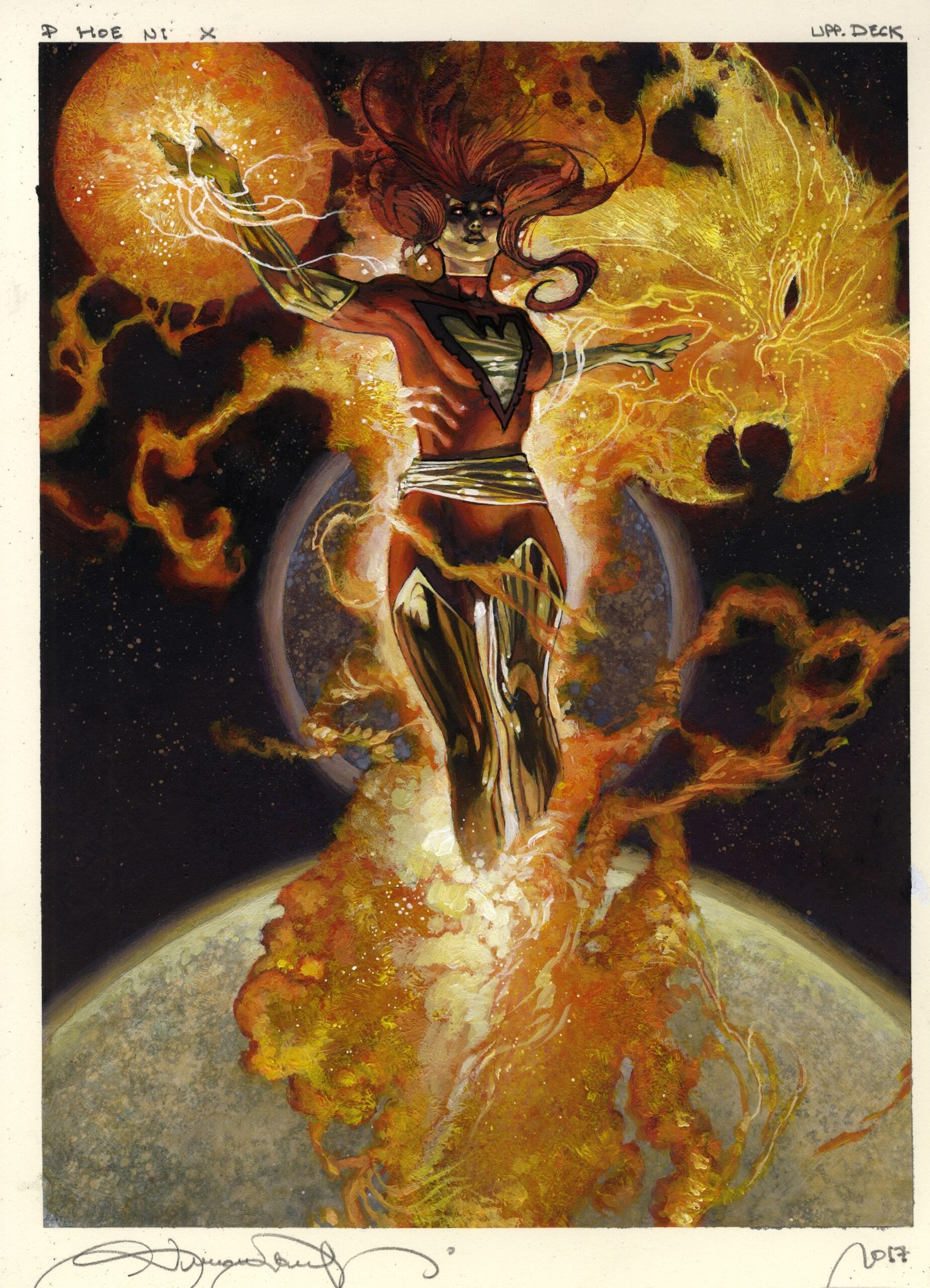
Ah there’s plenty! Apart from Akira Toriyama, who played a big role in being my first love, I then loved the work by Kaori Yuki, Nobuhiro Watsuki, Masakazu Katsura; but maybe Tsutomu Nihei is the one that imprinted more on me. As for western artists, Wendy Pini was structural in my learning, together with painterly artists such as Simone Bianchi. I don’t specifically seek out artists with a similar style to mine, I enjoy different artworks and distill them into something personal.
There’s a strong Japanese influence there. I am slightly embarrassed to admit that, while I admire the penmanship and the expressive style, my knowledge of manga is limited. My familiarity with European comics is slightly greater, and I know Simone Bianchi from his work with DC and Marvel. But I can definitely see the strong influence of comic line art in your work.
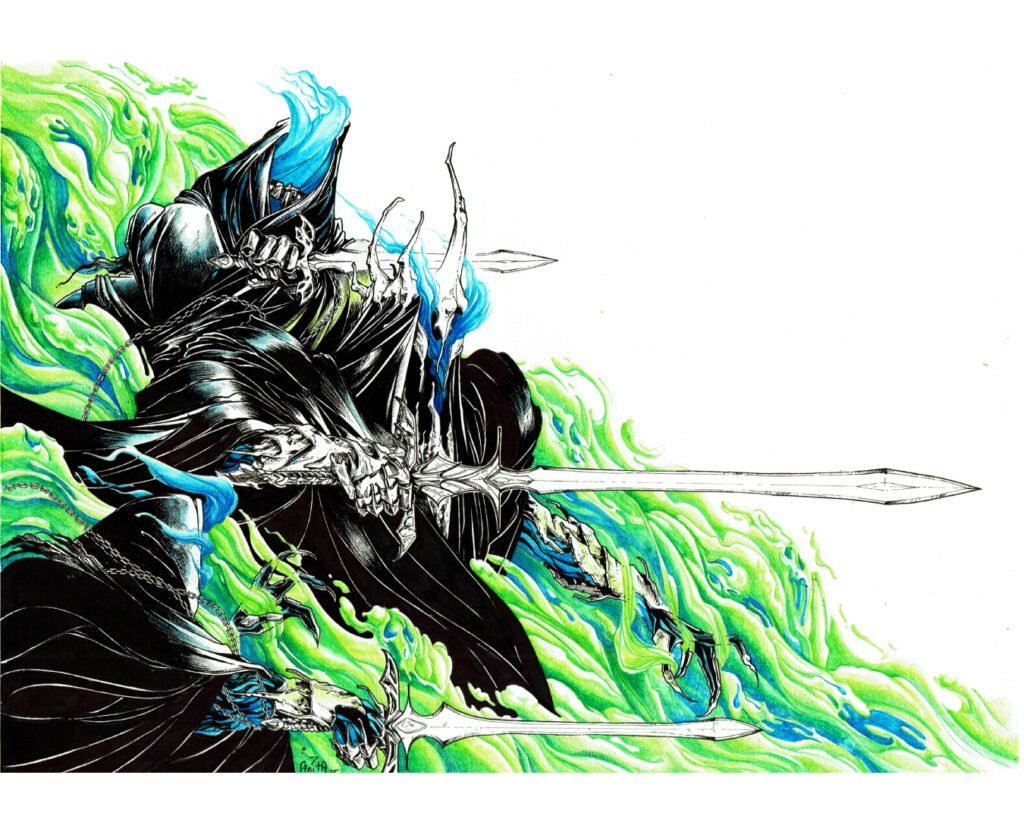
You mentioned some tools earlier. Could you perhaps talk us through your process? Do you work only traditionally, or do digital techniques play a role?
I do most of my work with traditional media, mostly because I enjoy the tactile feeling of paper. My main tool is a dip pen with India ink, sometimes I use micron pens (it’s basically alcohol based pens with various point size). I own and use an iPad Pro for selected parts of the work, for example providing sketches to a client, adding or studying colors. I used to do a lot of digital work but I got tired of it and moved back to paper for variety and less screen time.
Yes, I used to use micron pens! Though I found it can be harder to get the flexibility and variation that you get with a brush or a nib. Would you be able to talk us through your process, from start to finish? What’s the first thing you do when you get a brief, and how does it proceed from there? Any images you have of works in progress would be lovely!
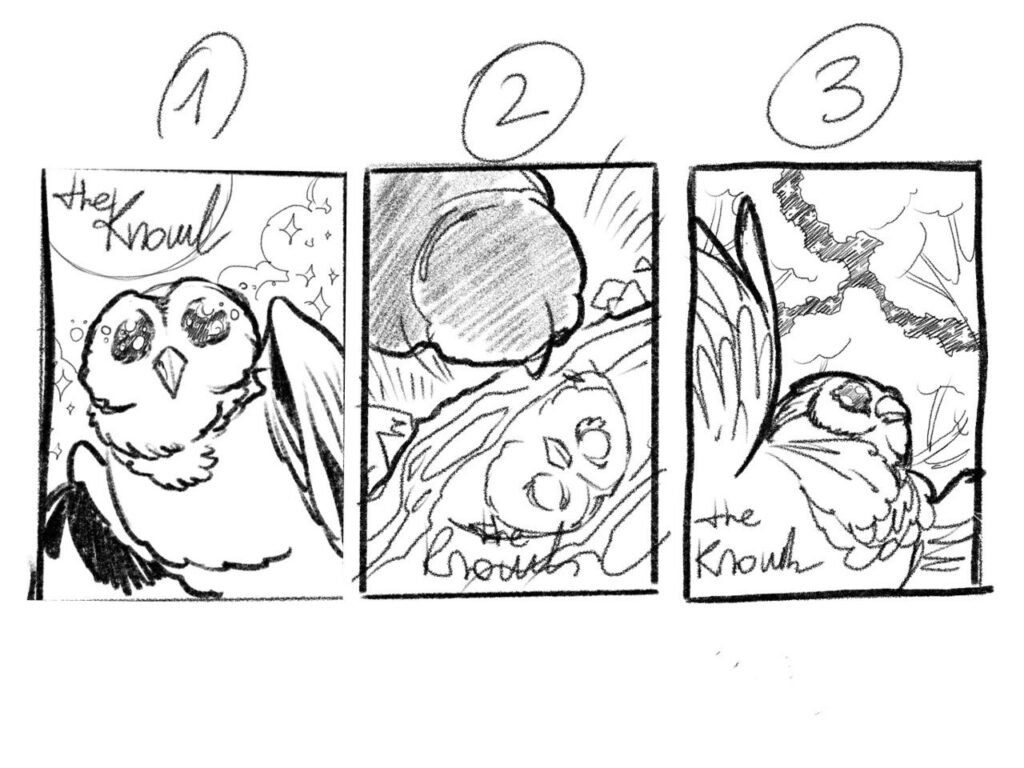
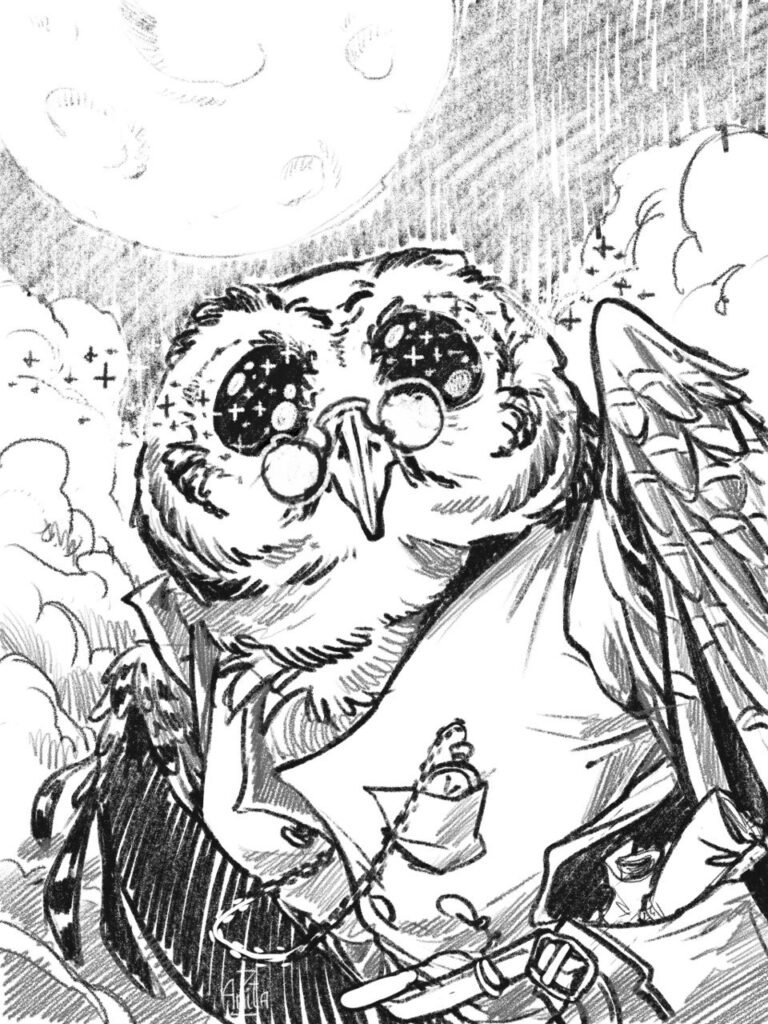
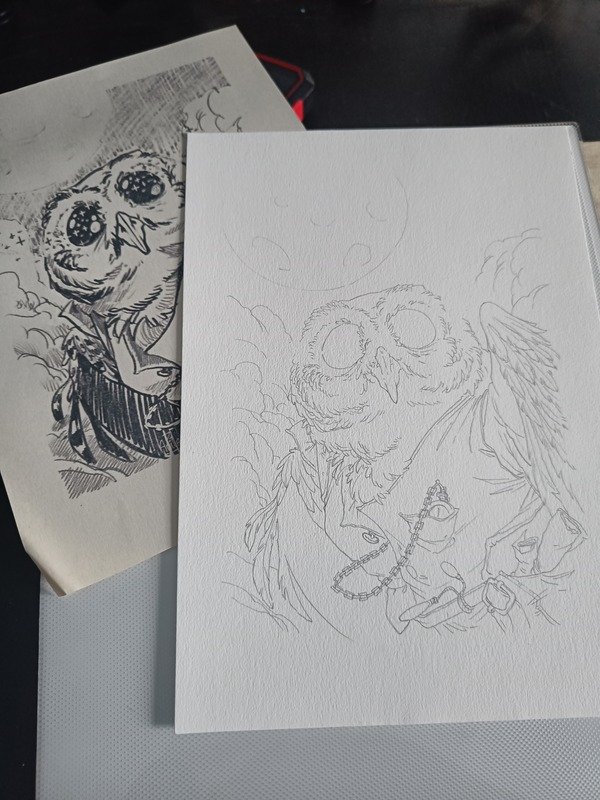
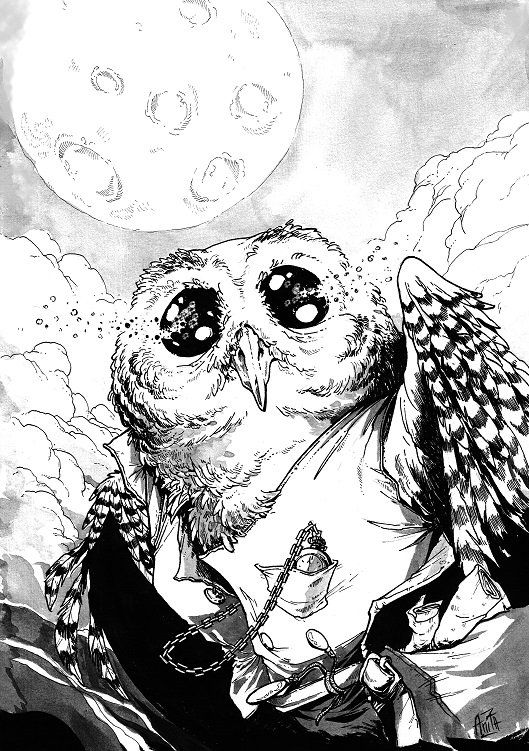
Of course! Here’s the breakdown of the process for the cover art I did for a short fantasy story, titled “the Knowl” written by David Kline:
- I start by providing some quick and small sketches, just to get the hang of the image. These thumbnails are usually made with Procreate, very small and not detailed, just to make sure we agree on all the elements, on the pose and the structure of the artwork. Being so quick and easy they’re also easily discarded or modified, so I can find the best solution together with the client.
- Once the thumbnail is approved, I move on to rough pencils, again on a digital file: this step is fundamental to refine some crucial details, such as the expression and body language, or the clothes, etc. I keep it simple so we can tweak it to its best without having to redo much work.
- Depending on the complexity of the image, I may provide a refined pencil drawing before committing to finish the artwork. It may be necessary if I need to nail someone’s resemblance, or if there are some items that may need to be revised by the client (maybe a specific sword, window, etc).
- When the drawing is agreed upon, I move the sketch onto paper and just ink it!
- The inked image is then simply scanned. It usually doesn’t need to be cleaned up or refined, but digital is always there to help recover mistakes or add effects. 😉
Thanks, Anita. As an illustrator myself, I’m always fascinated by how others work. It’s interesting to see that you use Procreate for quick sketching before returning to traditional media for later stages of the process. That’s a step I hadn’t thought of!
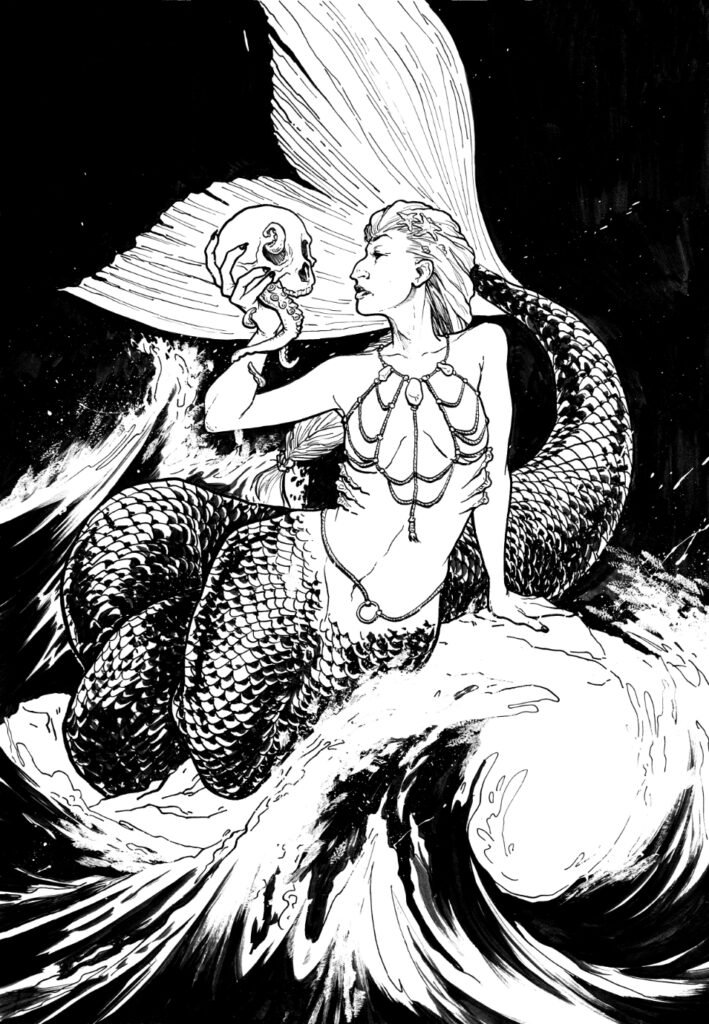
I note in your work that you have a strong grasp of anatomy and form. Would you say that your background in comics work has helped develop that, or did you have any formal training?
Both! I graduated at the Academy of Fine Arts of Venice, which in terms of art education is as classical as you can get. But also comics helped me a lot in simplifying the shapes, and especially in giving them life. I learned a lot by doing gesture drawing and life drawing, I really recommend both.
Actually, my son studied there briefly as part of the Erasmus scheme (which apparently is coming back)! What a beautiful place to be a student.
Yes, I’ve not done much comics work, but I should imagine that having to draw the same characters repeatedly in different poses really develops your skills.
What are your thoughts on how AI is currently affecting the creative industries? Have you yourself begun to feel any harmful effect? What are your views on AI?
It’s bad, man. The erosion of trust, of entry level gigs, the witch hunt … all of it will definitely cripple certain types of artists, especially emerging ones. I’ve not been personally affected professionally, but I am less and less able to recognize genAI images, which is scary.
I don’t think outsourcing art to a corporation, in the name of speed, can be any good. We are drowning in content AND in art of all levels, easily accessible to consume and to create. We’re sitting on thousands of years of creation and still producing a rather infinite number of art pieces everyday. We ARE fast at producing art! In my ideal world we would slow down just a bit to enjoy the process and the outcome.
However! There’s a lot of people sharing my sentiment, and there’s a lot of push for more human, analog, imperfect art than there’s been in a while. I want to believe we’ll make the best out of it.
Yes, that’s a good point about speed – and as you say, that applies as much to human-made art as AI. We are all under pressure to create new things all the time, and to up our “production rates”. I’ve been saying for a while that AI is just the latest expression of this same drive – to do things quicker and cheaper. Let’s make fewer but better things!
In terms of the things you like to work on, is there any particular type of project that you look forward to? When a client approaches you, what sort of thing do you most hope it will be? Cover work? Comics? Illustration? Fantasy, mythology, horror?
I’m interested in doing book (covers, interiors, promo art) and TTRPGs illustration mostly. My top favorite would be horror and folklore-related projects, with a good focus on monsters and creatures, but I’m always down for a fantasy pitch of all types.
Dream project right now would involve fantasy pirates, mermaids and sea monsters!
Pirates, mermaids and sea monsters does indeed sound great! Fingers crossed! 🙂
And finally, is there anything else you’d like to add? Any advice to artists out there who are trying to make a living?
Maybe something you all heard too many times but: it’s a marathon, not a sprint. Be patient, keep making art that you enjoy making and keep your day job as long as you can, because art careers are hard.
Thank you for the chat, it was a pleasure!
The pleasure, as they say, was all mine! Before you go, where are the best places for people to find you and your work?
I’m mostly on Instagram (and Threads) as @anitazeta_art, where you can find a gallery of my art, as well as updates on my projects, and my contacts. I usually share WiP pics in my stories and finished products on the gallery.
I’m also in the middle of opening my Patreon, which will be fully operational in a few weeks: I plan to share more in depth about my process there, and also plan to workshop stories and artbooks together with the community. The link is patreon.com/anitazeta
END OF INTERVIEW
Thanks again to Anita for taking the time to chat with us. I’m sure you’ll all agree it’s been fascinating – artists are all so unique in their approach and methods.
Just a reminder that, if you’re a writer or publisher, and you want to hire top-class professionals such as Anita, contact WoodPig Press to find out more about our publishing services.