Week 22 – in which we ponder life after the Singularity, and catch AI in the act
As you should all (hopefully) by now be aware, we at WoodPig Press are anti-AI. This doesn’t mean that there aren’t potential uses that AI can have that will benefit humanity (there are lots), or that we shouldn’t be trying to create a version of AI that isn’t ethically or environmentally problematic (arguably, we should). The economist Rutger Bregman, author of Utopia for Realists, recently made just this argument: unless socialist-minded people get their head out of the sand and stop pretending that AI is simply going to pop like a bubble and go away, we are handing the future to money-grabbing, planet-heating, livelihood-destroying, Nazi-saluting tech bros. Whether there can be a version of AI that meets these criteria is a big question, but I think Bregman is right in saying that we should at least try, because – let’s face it – AI is not going to go away, and it’s only going to get better. The ultimate answer, as he proposes, is probably going to be Universal Basic Income – which though it sounds like a hippy commie dream, seems like the only solution to the growing possibility that the future will contain almost no jobs. Thinkers as diverse as Aristotle, Marx and Maynard Keynes have all looked forward to a time when automation would free us up from daily toil so that we could be creative and have lots of sex (I’m reading between the lines on the last part) – whereas in the hands of Musk et al, it seems to be doing the opposite, and funding their weird planet-escaping fantasies. The problem is obviously that, as young children, they did not read this ecological fable of a businessman who pollutes the Earth in order to build a rocket to visit a distant star:
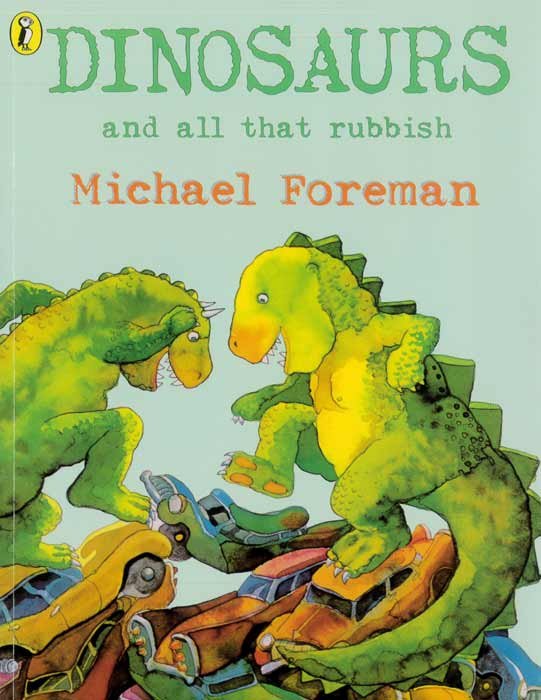
We should all send them copies. Seriously.
Anyway, none of this alters our stance on AI, which is basically that it has no place in creative endeavours, and that we should support humans over machines in all artistic projects. This is because creativity is a human activity that, fundamentally, is pursued for its own sake. If we start farming that out to a bot, what’s next? Letting them have our orgasms for us? The point of art, for the artist and for those who appreciate it, is the process – the emotions and ideas involved, the meaning it had for the creator – but machines have no such feelings, because they are not human (stop me if I’m going too fast). Yes, they can mimic them, and eventually they will do this so well (probably already can) that you won’t be able to tell the difference. But there will never be anything it is like to be a machine, because machines aren’t conscious, and never will be.
Anyway, I don’t want to disappear down that philosophical rabbit hole, but I note that there is a growing divide in the creative community between those who think AI can fulfil a useful assistive purpose, and those who think it can go fuck itself with a splintered stick. The former group seem to favour the argument that if we don’t evolve our creative practices to accommodate it, then we are headed for extinction. But it struck me just what a short-sighted argument this is. First of all, it assumes that the AI revolution will be like past ones: it will save those who adapt, and abandon those who don’t. The problem with this is it also assumes that AI will leave any new jobs for us to adapt to. A few years ago, you might have argued that some occupations would be saved – especially in the creative industries, the output of which had for decades seemed beyond the capacity of machines to replicate. Now, not so much. So all those cheerleading for AI because it “makes you a better artist” (writer/musician/insert almost other discipline) are just hugely short-sighted and, to use a technical phrase, “really fucking stupid”. In the hands of the current tech bros, AI is a tool to rob us of our livelihoods, slit our throats, and leave us dying in the gutter, and NO ONE will be spared.
You’ll probably have heard the latest scandal surrounding the short story that won a prize, but then turned out to be (probably) written by AI. Oh no! The machines can win literary prizes! We have to use them or else our writing will suck! I think this is also a stupid conclusion, because what’s going on here is not creativity in the fullest sense. It’s a collage of other people’s work.
If you need proof of this, I have some.
Last year a similar hoo-ha was being made about the new ChatGPT release that promised to deliver original creative writing. I read it, and shared my opinion on social media:
The new OpenAI creative writing bot’s “short story” has the phrase “democracy of ghosts”. It’s the sort of phrase that would make me stop and admire it, if I were reading a human author – which, it turns out, I was, because it’s from Nabokov’s 1957 novel “Pnin”.
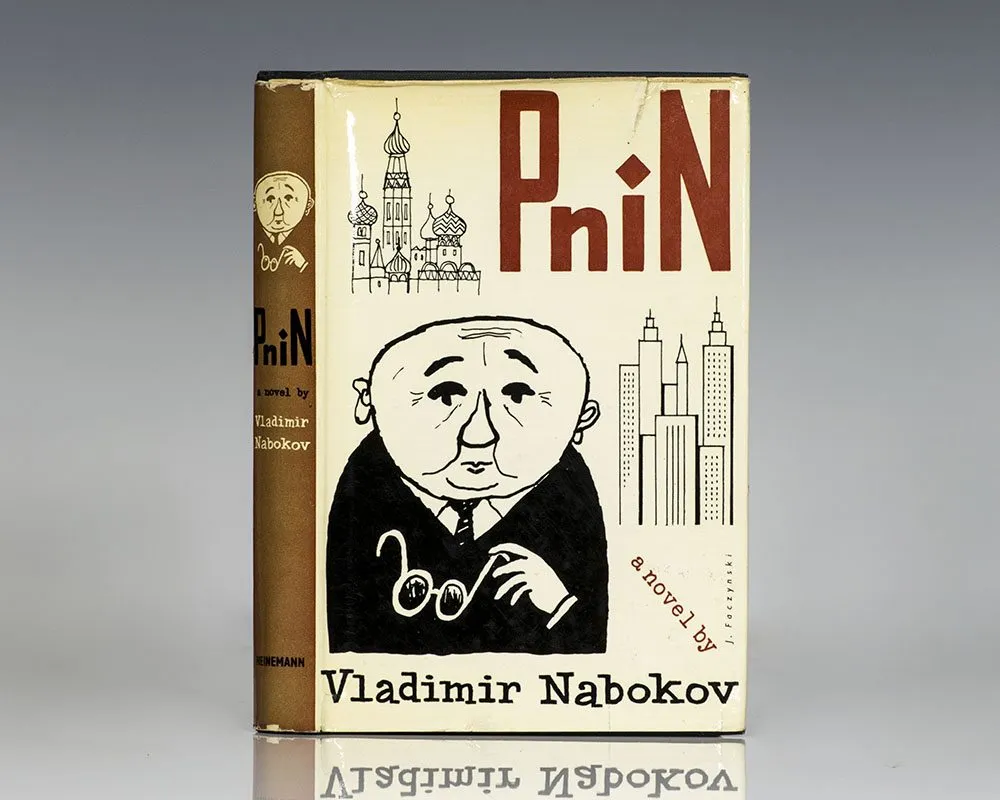
Caught red handed!
Ah, but that was an early version, you say (you AI booster, you). They’re much better than that now. So today, I did a little experiment. Here’s a cartoon I did a few years ago:
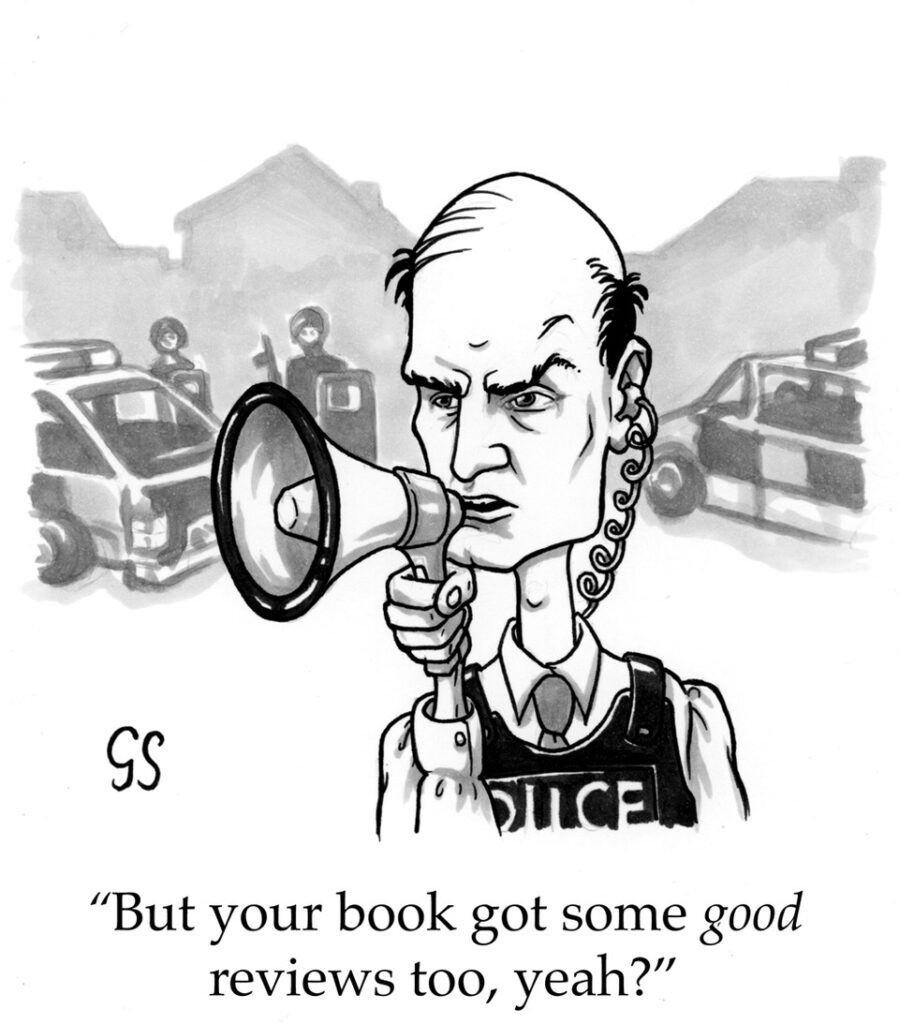
I know, I thought, I’ll describe this cartoon with the exact same text, and then ask ChatGPT to replicate it (hoping that it would simply steal the image from the internet – or something very close – and be hoist on its own petard). Here was my prompt:
Can you do a cartoon in the style of the New Yorker, with a policeman with a bullhorn, police cars in the background, saying, “But your book got some good reviews too, yeah?”
And this happened:
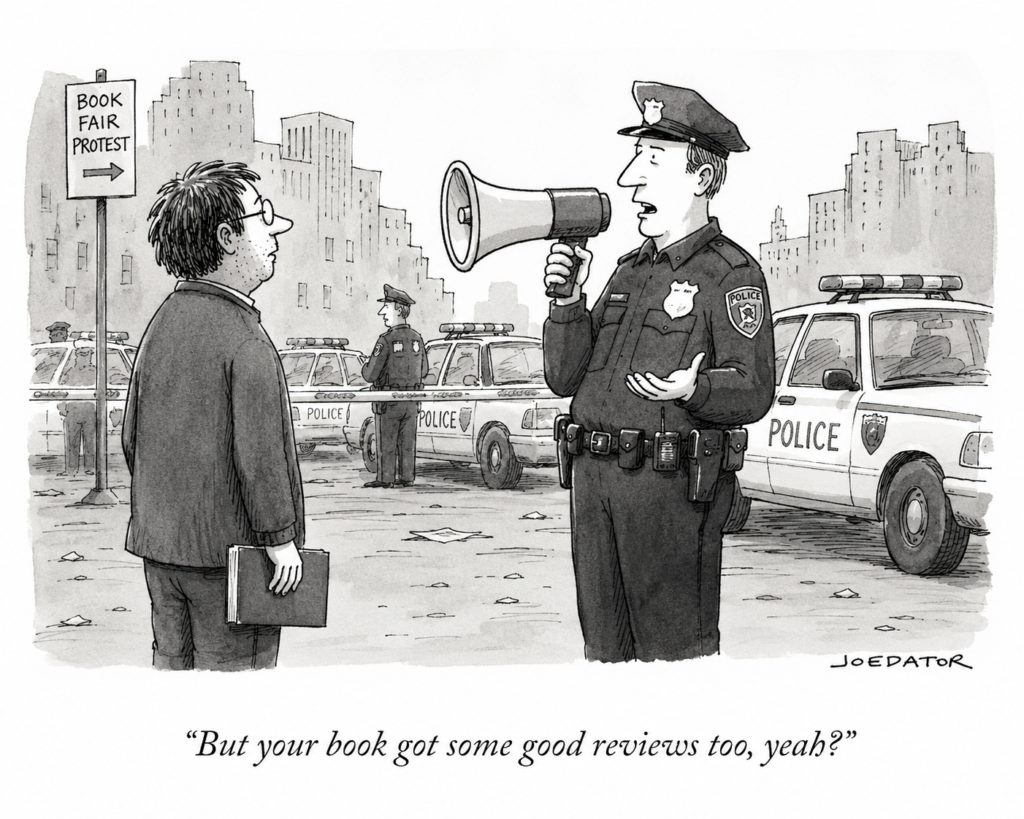
Cue disappointment – and not only because it had screwed up the joke by putting the disgruntled author in the picture (and what the hell is “Book fair protest”?). But then I thought: Who is Joe Dator, and why is his signature on the cartoon? He is, it turns out, a New Yorker published cartoonist. Check out his stuff – he’s great. So ChatGPT had simply “borrowed” his signature whilst in the process of “borrowing” details from all the other cartoons it’s been “trained” on (I think I’ve used up my alotment of scare quotes now).
So before you rush off and evolve, remember whose stuff this beast is feeding off, and what’ll happen when the food runs out. It needs us in order to “evolve” – and for it to keep evolving – and how’s it going to do that when we’ve all been plagiarised into destitution?
Yes, Universal Basic Income, please. Robotify my laundry. Cure cancer. But leave my art alone.