Week 21 – In which we interview the wonderful Bristolian illustrator of all things fantastical
This “week” we have the pleasure of interviewing the wonderfully talented Mr Jimmy Makepeace, an artist based in Bristol, UK. Jimmy is part of WoodPig Press’s “loose collective of freelancers” whose services we plan to call on, and I’ve been wanting to interview him for a while regarding his influences and process.
This will be the first of a series of similar spotlights we’ll be doing on our artists, designers and editors.
The format of the interview was an email correspondence, where we both had opportunity to respond thoughtfully to topics raised. Questions and responses from me (Gareth Southwell) are in bold.
So, what first pushed you towards art?
A handful of things! Endless encouragement and access provided by my family. They took me to see things that interested them and always provided me with access to materials and time to make things. I think by the time I was about 11 I’d absorbed “I Make Art” into my personality (for better or worse!!). I always liked fantasy as a genre so the DVD extras from the Lord of The Rings: The Two Towers were a revelation to me. Initially I wanted to become a prop maker (I still do! I have a few friends in props and I’m envious), and quickly switched to wanting to be a concept artist – it just seemed a lot more immediate. Then at uni I found the whole fantasy thing too embarrassing and spent forever trying to find ways to justify it to myself, but eventually (after an ongoing foray into animation and some growing up) settled on making art I like!
So did you study illustration at uni? And is that how you’d describe yourself now, as a professional illustrator? I’m just aware how many creative people wear lots of hats – myself included – and our passion might be a side hustle, financially speaking. I guess I mean: are you doing what you want to do? 🙂
Yeah! I studied Illustration at (then) University College Falmouth, which was the best possible time, and hugely exciting to be surrounded by so many talented and expert illustrators.
So far as what I’d call myself, I think Illustrator is the fairest! It’s what I spend most of my time doing. I am technically employed as an animator and spend a lot of my time doing odds and ends of After Effects work – it’s a great supplementary skill to illustration.
My ideal job would be making fantasy art full-time, but there’s a limit to how much I can box myself into one role, like you say – not just financially, but also I don’t ever want to stop experimenting! I would absolutely say I’m doing what I want to do, but in that there’s always room to get a bit more specific.
Yes, I was aware of Falmouth’s reputation when I was studying – though in the end I opted for English and Philosophy rather than art. I still wonder some days whether I took the right path! And I understand the need not to pin yourself down in terms of what you are and do – I think that’s part of the creative mindset. So who have been your influences over the years? What artists do you admire?
Falmouth was great, I wish I could go back and do it again. And I know what you mean, it’s almost impossible not to have those sliding doors fantasies.
Influences are a massive subject for everyone, but I’ll try to be as concise as possible.
First I would be remiss if I did not mention my mum Laura Boswell. Both my parents have always encouraged me and provided me with the time, space and materials to make the work I want to. Having a parent who has properly mastered their work is a huge privilege – to be able to pester them with stupid questions.
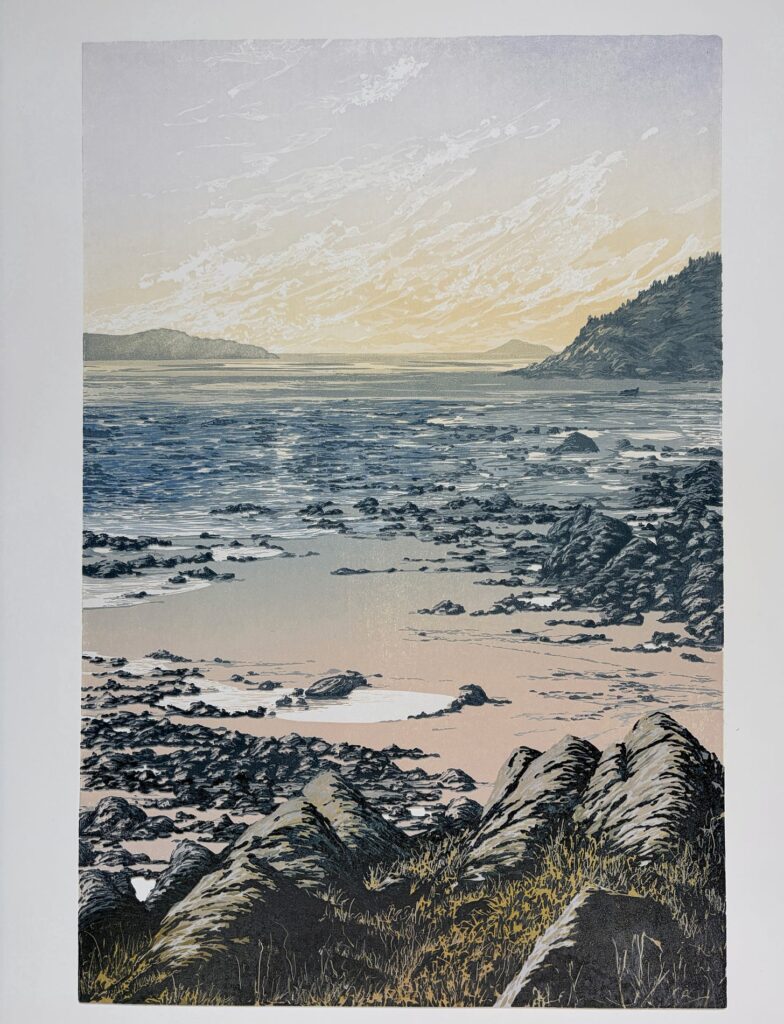
In terms of artists, whose work I most wanted to imitate or people who I saw working and thought “I want to apply that approach to my own interests”, João Ruas was the first artist I saw straddling the line between concept art and more illustrative and sometimes fine art work. He was/is a huge influence on a lot of illustrators! João Ruas was my entry point into that era of illustration, and off the top of my head the people I liked then and who informed my development would be: James Jean, Jillian Tamaki, Tran Nguyen, Sam Weber, and Soey Milk.
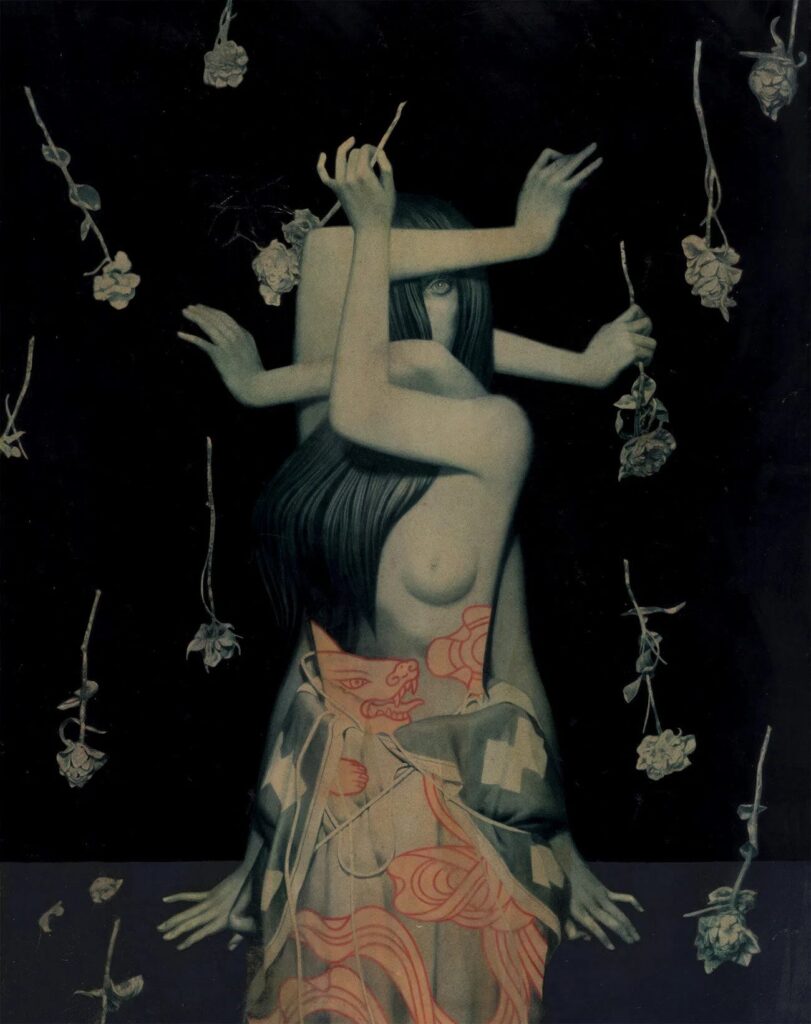
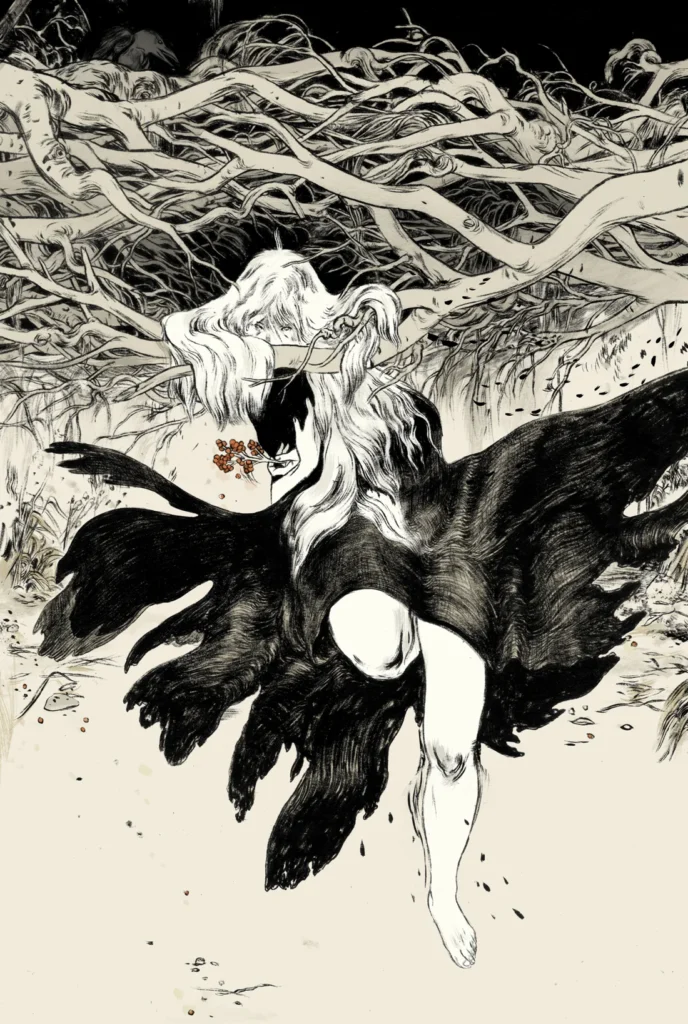
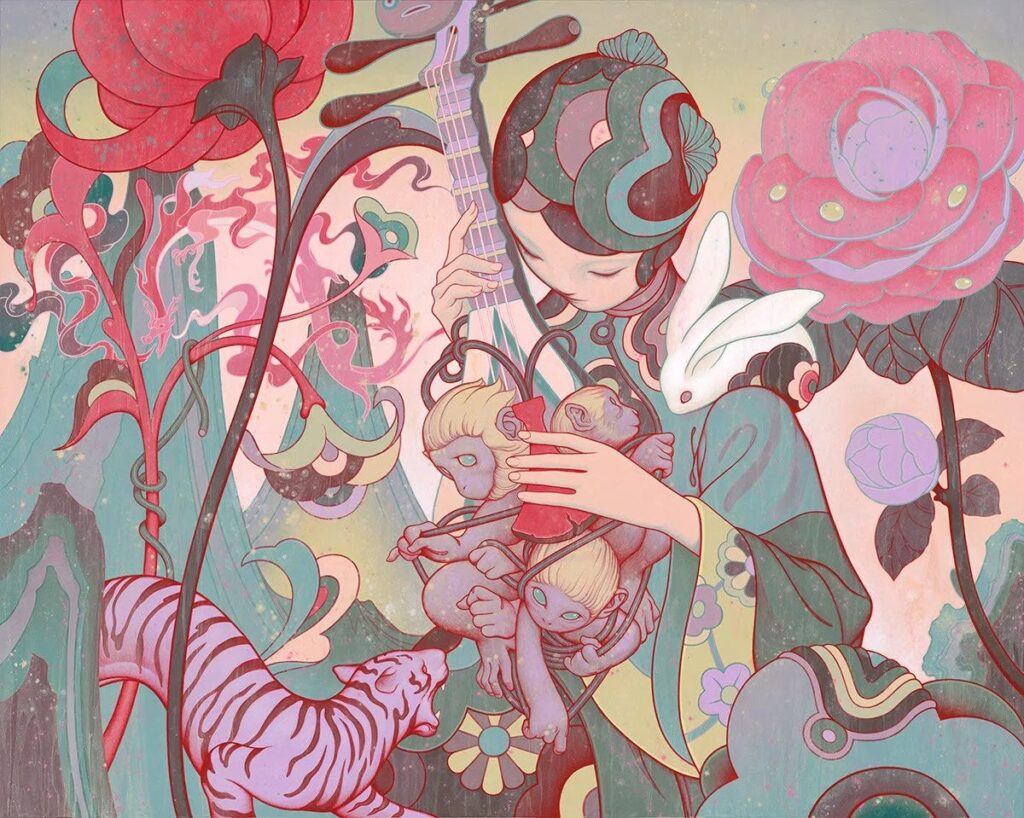
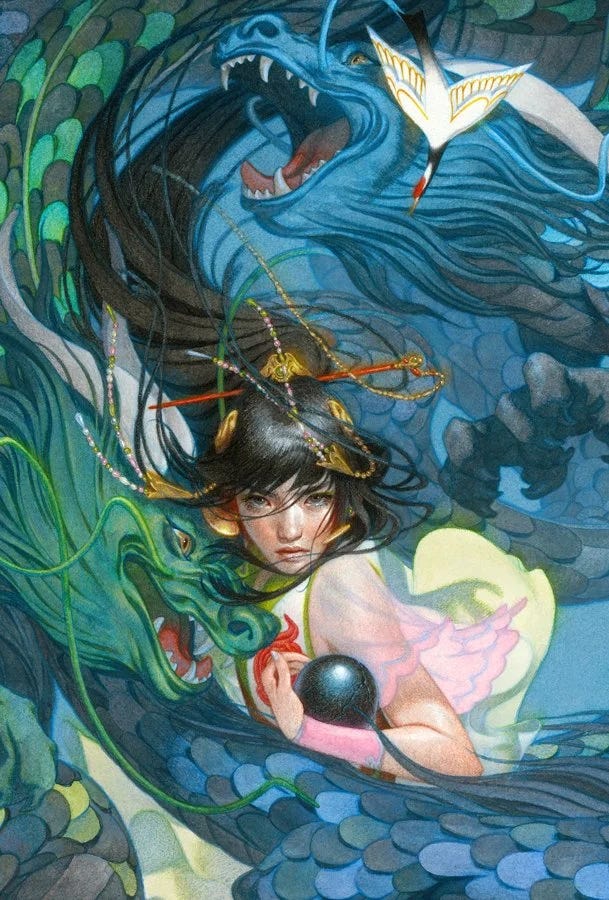
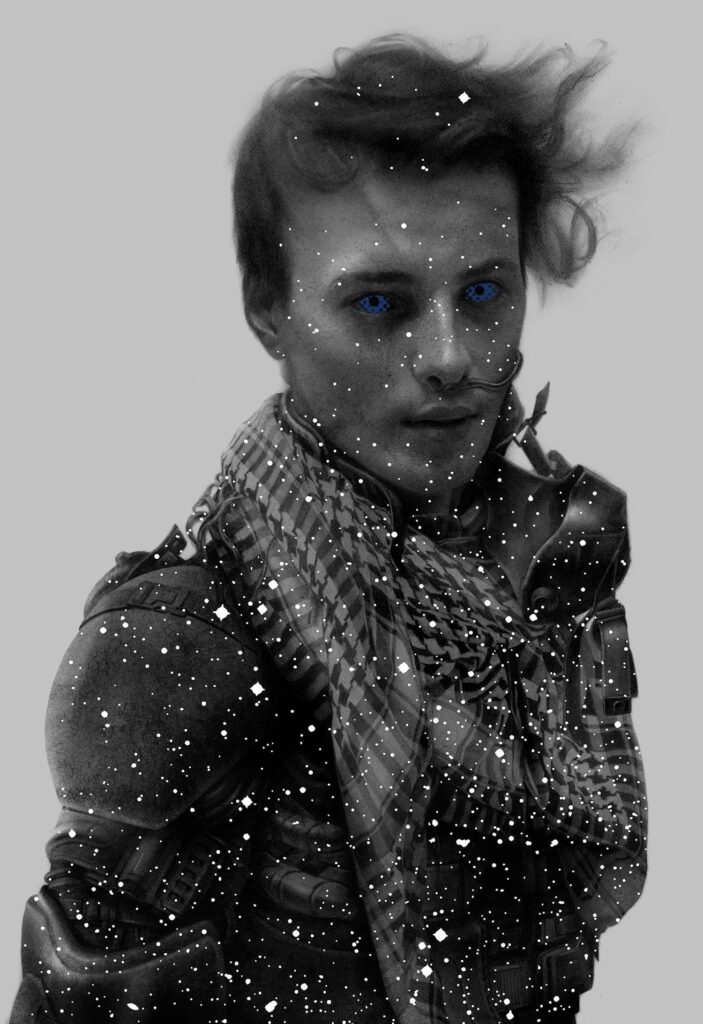
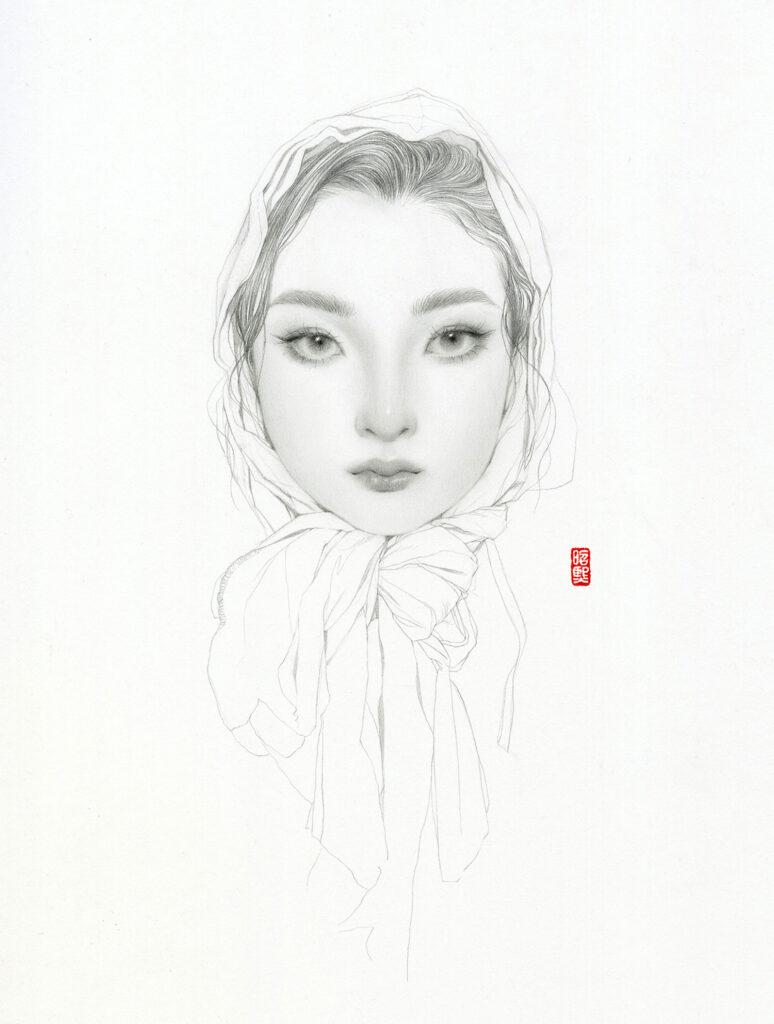
Top left to bottom right: “Idyll” by João Ruas; Irish Myths book illustration, by Jillian Tamaki; “Pipa” by James Jean; “The Dragon’s Promise” by Tran Nguyen; “Paul Atrides” by Sam Webber; “Self Portrait” by Soey Milk.
As a teenager I think it was hard (for me at least) to find influences who weren’t contemporary, but at uni and after I definitely became more interested in learning about art history and got more and more interested in the Symbolists, both the British Victorian branch of them (Herbert James Draper) and the Austrian Secessionists (Gustav Klimt). Since I’ve hit my thirties, I’ve kind of caught the old man virus and am very influenced by Historical Reenactment (Get yourself to Tewksbury for the battle) and medieval religious art. Almost in reaction to that I also love pulp fantasy, lurid colours and weird monsters. I think my whole career I’ve felt pulled in both directions: I’m desperate to make serious paintings and really capture something, but at the same time I want to draw the sludge monster, I want to draw worms and rats and horrid little men. I want to see a nice cathedral (Basilica of Notre Dame of Fourvière in Lyon is my current top spot), but I also want to put my hand in the compost bin.
There’s a bunch of folks I couldn’t fit in here, Moebius is an obvious choice, Panos Cosmatos’s films, David Lynch, Jenny Holzer, Alfred Gilbert, Alfred Wallis. Waterhouse, Sargent, Katsuhiro Otomo, Yoji Shinkawa.
I don’t know how concise I’ve been, but I think this lot are the core of it!
Your mum’s work is lovely – I’m a big fan of print making (though I’m shit at it myself!). I can also see the influence of her subtle gradations of colour on your work.
Yes, João Ruas is amazing – intimidatingly so – and I love James Jean too (we have a few of his prints around the house). The others I’m not so familiar with, but I look forward to investigating them. It’s always great to discover new art.
Historical reenactment sounds like fun!
There should be room for a mashup of sludge monsters and fine art. I’ve never made a distinction between “low” and “high” culture – I think that’s all nonsense. Shakespeare loved his smut and gore, so that’s good enough for me.
So, being influenced by both traditional and digital artists, what is your own process like? Do you work in both? Combine them? Save painting for the weekend? What tools do you use?
Yeah I think it would be difficult not to be influenced by mum’s approach to colour and composition!
Oh, I’m excited to talk about my process. I think every artist should recite their approach like a mantra – it’s worryingly easy to forget.
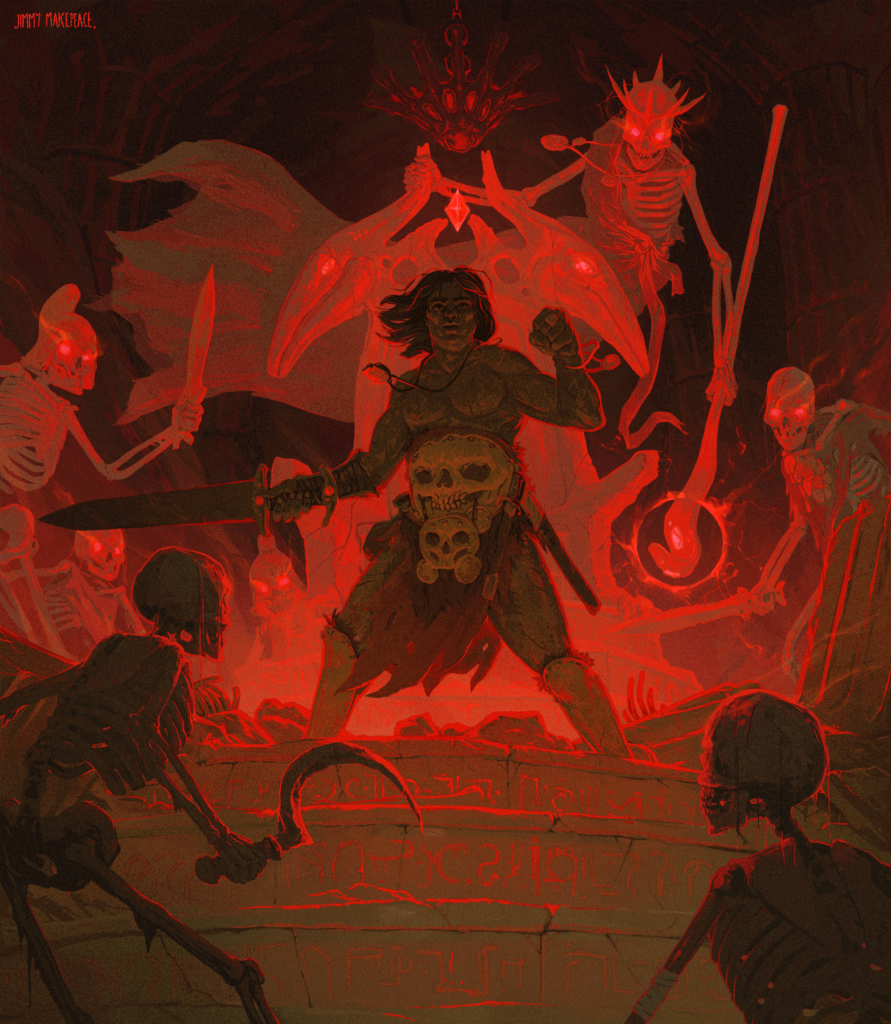
Generally at the moment I work exclusively digitally for “illustrations” I kind of want to achieve something that has the rough, tactile quality of traditional work, but without ignoring that it was made digitally.
My process looks like this generally:
Either I’ll have an idea for something I’d like to draw, or a client approaches me. If it’s client work, I’ll be well behaved and produce some thumbnails (there’s still a chance I’ll do this for myself, but usually if the image is fully formed it’s kind of already done).
Next, I begin the rough sketch, blocking out forms and cutting and shifting things until I feel like the image has a nice flow and balance. This is also illustration purgatory, where 95% of my ideas end up (for personal work that is!).
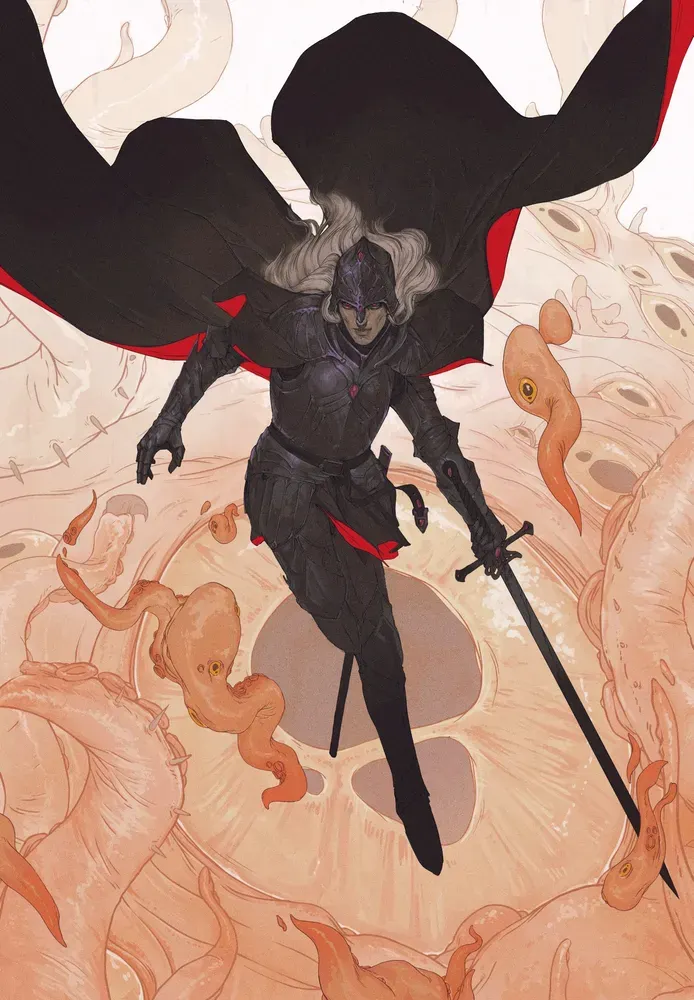
Once I’ve got enough information down, I’ll either tidy it up with a second rough sketch to further refine the details, or if I’m happy there’s sufficient scaffolding, I’ll jump onto the line-work phase. To do this I’ll get a nice thin brush and slowly make my way across the image making sure I’ve captured everything I want to be in the final painting. It’s pretty common to hear this, but it’s absolutely true – for me at least – that if you don’t have a decent drawing, you aren’t likely to make a decent painting.
When the line-work is complete, I’ll block in a flat colour form for each segment of the painting. I learned this making assets for animation. It’s incredibly useful to be able to non-destructively move things around and re-scale them. Once the colour is blocked out, I can use them as clipping masks for the underpainting.
For the underpainting, the key thing is getting nice strong silhouettes and gradients. It’s also a really good chance to be messy and expressive with the mark making, because a lot of the texture that’ll end up in the final piece is put in at this point. This is usually the part I struggle with the most but it’s usually better for me just to delete a problem element of the painting and start again.
This is usually where the image most takes shape too. There’s quite a lot of polish to include.
Once I’m satisfied with the underpainting, I’ll probably hop on the overpainting and add an FX group (noise, possibly a gradient map, and maybe some posterisation). The overpainting generally just ties everything together for me. I use little bits of the line work to peep through, usually as the darkest areas.
Then that’s usually it – maybe a bit of post painting tweaking, or dropping some pattern on it, but normally this is when something is ready to hand off to a client or put in my portfolio!
If I’m doing something observational like life drawing, I generally like to just hop straight in with a Muji rollerball pen, more recently a fountain pen (Lamy Safari) or a felt tip. It’s nice to be so immediate and also see my mistakes left on the page.
That’s about it for how I make an image!
That’s fascinating, Jimmy. I see what you mean about the rougher layers of underdrawing giving life and spontaneity to the finished piece. That’s a good tip.
And regarding your digital process – for the geeks reading this! – what’s your setup? I assume you use a drawing tablet? What sort of software? Are you a Mac or a PC guy?
Tech-wise I have a Cintiq and a normal(?) Mac desktop. I’m not really a tech guy. Beyond loving my Cintiq (what I’d save in a fire), I do really like tech, but more at the end of Gameboy cameras – I can’t resist a gimmicky toy camera or piece of drawing software. I really like when the media used is apparent in the finished piece (paint-strokes, misaligned layers in a screen-print, etc), and that absolutely applies digitally too!
And in terms of software, do you have a favourite program? Do you switch between a few?
Completely forgot to mention software! I use Adobe Photoshop 2024 (living in fear of some of the updates), and After Effects for animated work. Sometimes I’ll do a bit of animation in Photoshop using FrameBar, if there’s an asset I need to move in a specific way. I have used Procreate in the past, and it’s lovely to be able to take a little pad out away from the studio, but it takes a moment to get used to using it!
Yes, I’ve stopped using all things Adobe (because of the subscription cost). Tech is both a wonder and a curse, isn’t it? Speaking of which, what are your thoughts on AI? Are you finding it affecting your work in any way?
I really should make the jump to Clip Studio Paint soon. I guess I’m just a bit stuck with executive dysfunction about making the change!
With regards to AI, I think I feel the same way as most of my fellow illustrators, animators and other visual artists: my feelings are universally negative. In its generative imagery form, it only exists to cheapen an industry that is already challenging to work in. A tedious executive class has used the technology to attempt an extremely hostile takeover of the culture industry by expropriating the labour of millions of creatives. I can’t offer any kind of endorsement for its use, even in shitposting. It’s almost too difficult a subject to critique given the contempt I have for every aspect of it, from its exploitative class implications (not just stripping the labour of creative professionals, but it’s exploitation of many in the Global South for AI’s training), to its significant environmental damages (sound pollution, water usage and supply chain problems). I’ve not even touched on how shit it looks as an end result, or what it does to our sense of shared reality. Long live human artists.
I remember when the first image generators came out on mobile as little toys, I had a bit of a play around with them, and after half an hour I just got this incredible feeling of hollowness. It’s the same feeling I get when I fall into the trap of “debating” someone (not something I’ve done in a long time). It’s emotional empty calories – there’s no nutrition there at all. Even when I’m churning out the worst “Oh my God, I can’t draw, why did I think I could draw” work, I don’t get left with that feeling. It’ll be funny and I’ll feel good when it all falls apart.
That’s exceptionally well put – and I agree with all of it! The damage to human culture in general just doesn’t bear thinking about. As you say, hopefully the bubble will burst and we can move toward more ethical uses of the technology at a scaled down and sensible level that actually benefits people.
Well, I think that’s all my questions! Thanks so much for taking the time to talk through your process and inspirations – it’s been genuinely wonderful. Finally, is there anything you want to say or share? If people want to find you, where are the best places?
Not anything to share! I think that’s the sum total of my wisdom in this heat.
I can be found at the following places:
Thanks so much for the questions. It’s always a joy to be asked!
END OF INTERVIEW
And that’s it until next time. Thanks again to Jimmy for that lovely interview – we’ll have more from other creators and editors soon. By the way, reference to the “heat” at the end refers to the recent heat wave in the UK.
Just a reminder that, if you’re a writer or publisher, and you want to hire top-class professionals such as Jimmy, contact WoodPig Press to find out more about our publishing services.